















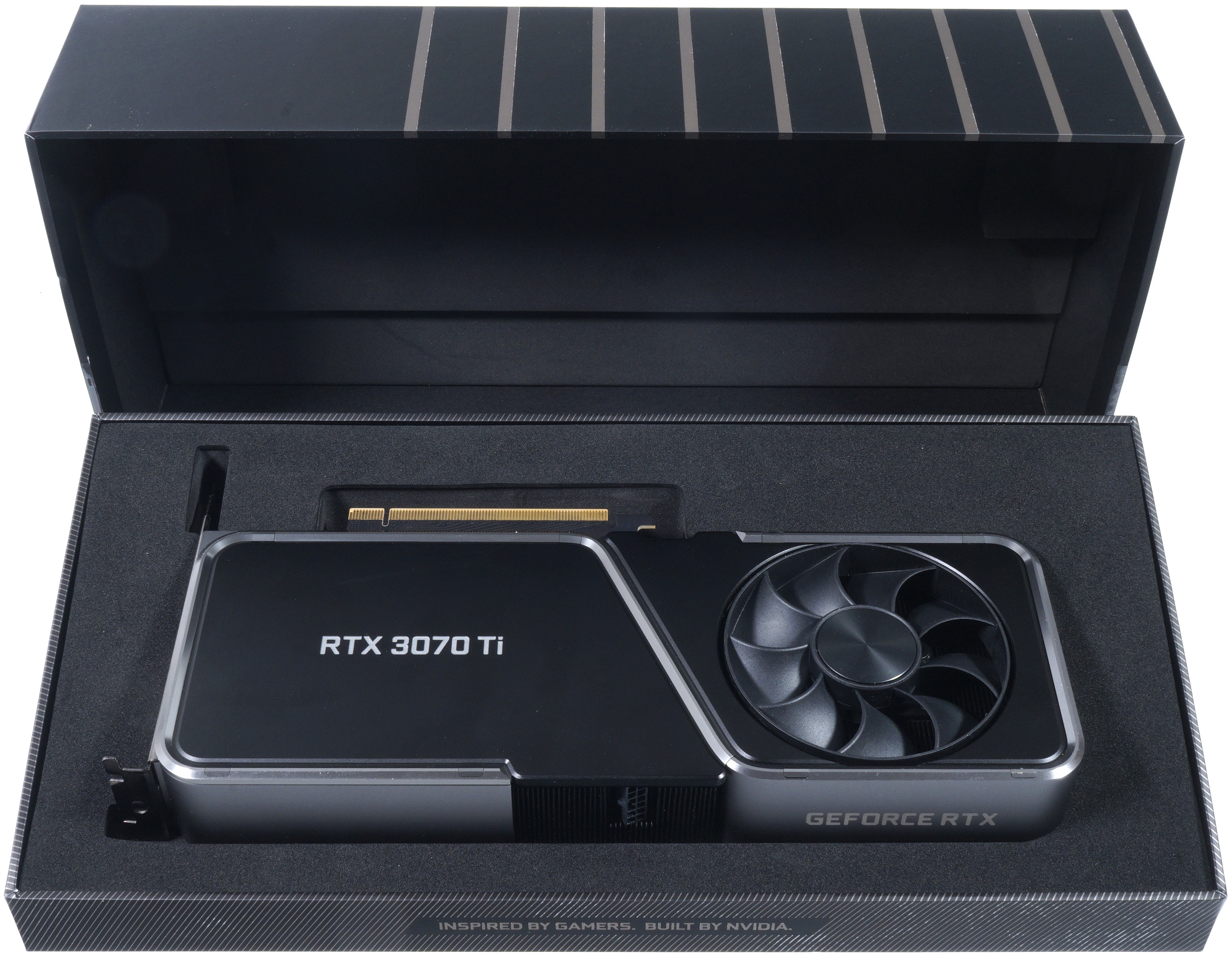
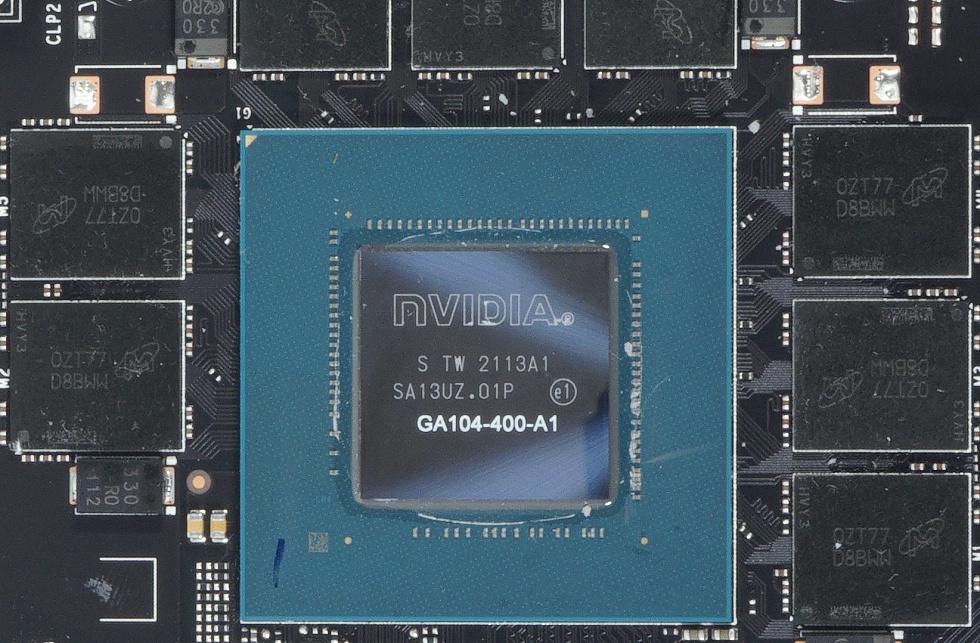
For the GeForce RTX 3070 Ti FE (Founders Edition) unveiled today, NVIDIA uses the full GA104.1 In contrast to the GA102, a smaller chip like the GA104 usually promises higher yield and thus better availability, improved efficiency and cheaper production. So much for the theory. Except that this often clashes with practice. Because the question remains in the room, which pull-ups one had to make, in order to get all chips with fully functional units also really broadly effective to run. But more on that later.
For the GeForce RTX 3070 Ti, NVIDIA now uses all 48 SM units (the RTX 3070 used 46), resulting in a total of 6144 CUDA cores (up from 5888). In addition to the CUDA cores, NVIDIA’s GeForce RTX 3070 Ti is of course also equipped with 48 next-generation RT cores (up from 46) and 192 Tensor cores (up from 184). In addition, there is the prestigious GDDR6X memory, which, however, turns out to be quite narrow with 8 GBytes. But there will be more to write about that, too.
However, the gap between the already launched RTX 3070 and the GeForce RTX 3080 is large, so many have been dreaming of a GeForce RTX 3070 Ti with an even more stripped down GA102 until now. But now NVIDIA tries it from below and releases the GA104 completely. However, with only 2 SM more, even on paper it will probably be rather hard to really fill the gap between the two cards in the middle, even if you want to speed it up even more with the help of the faster memory.
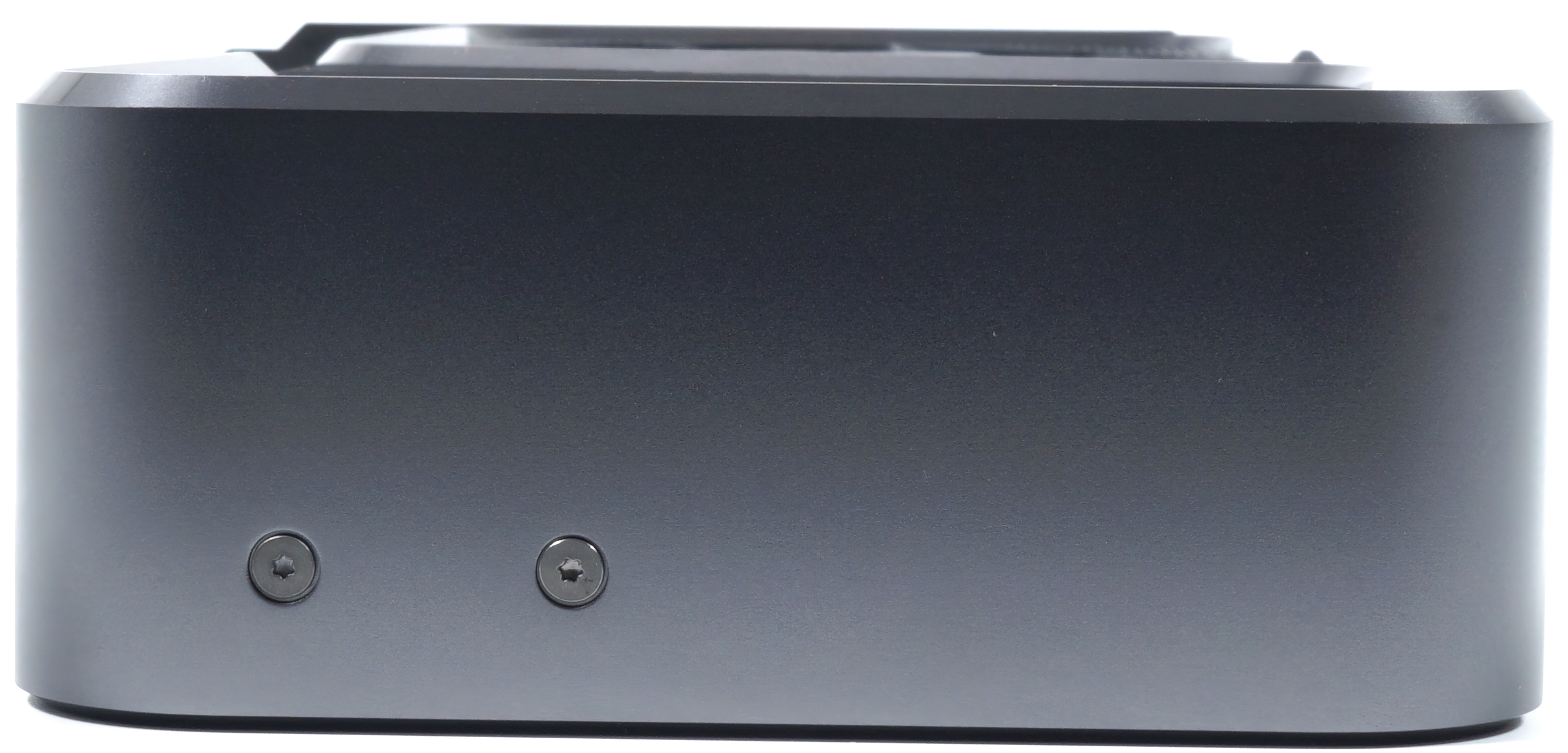

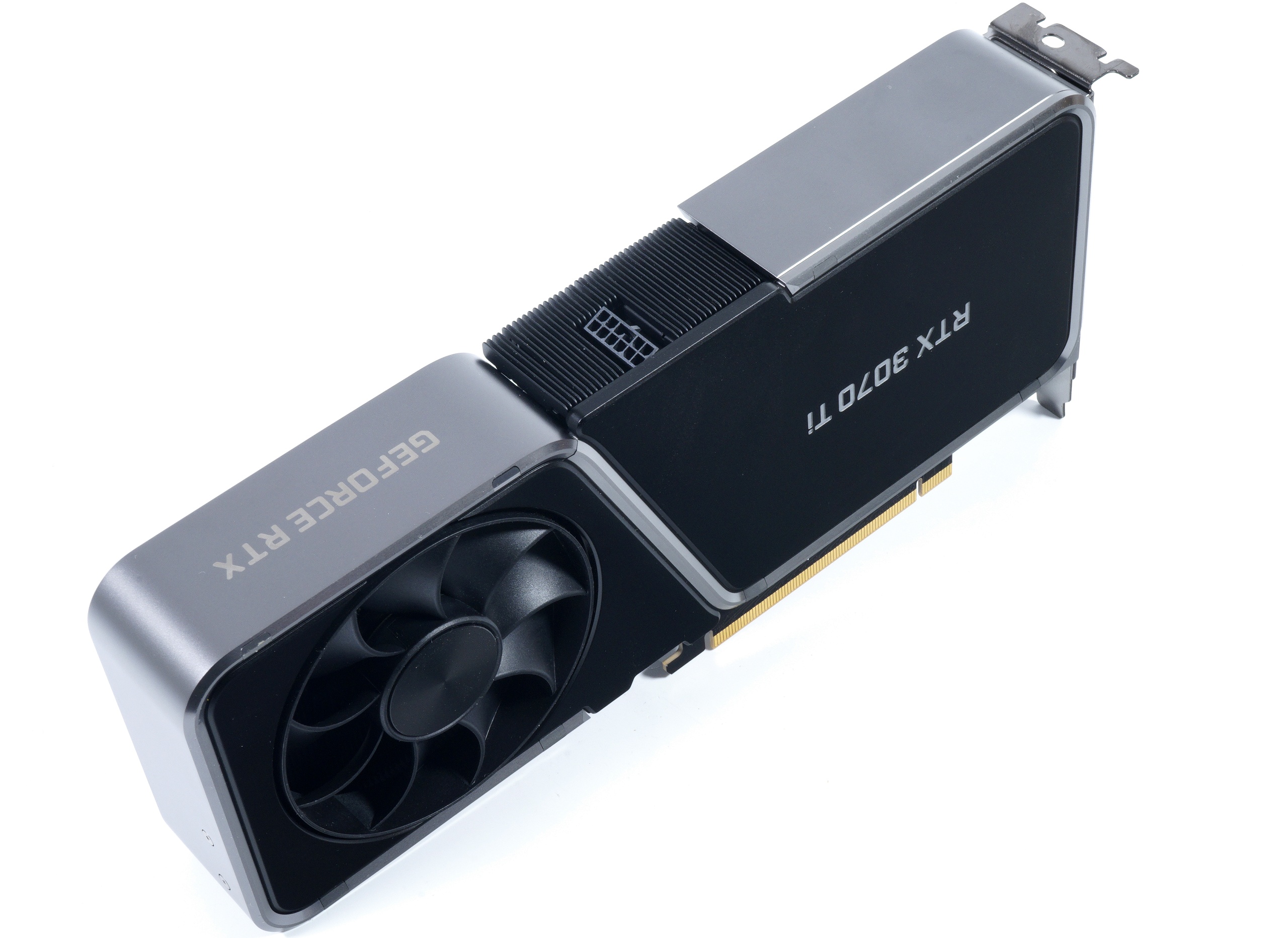
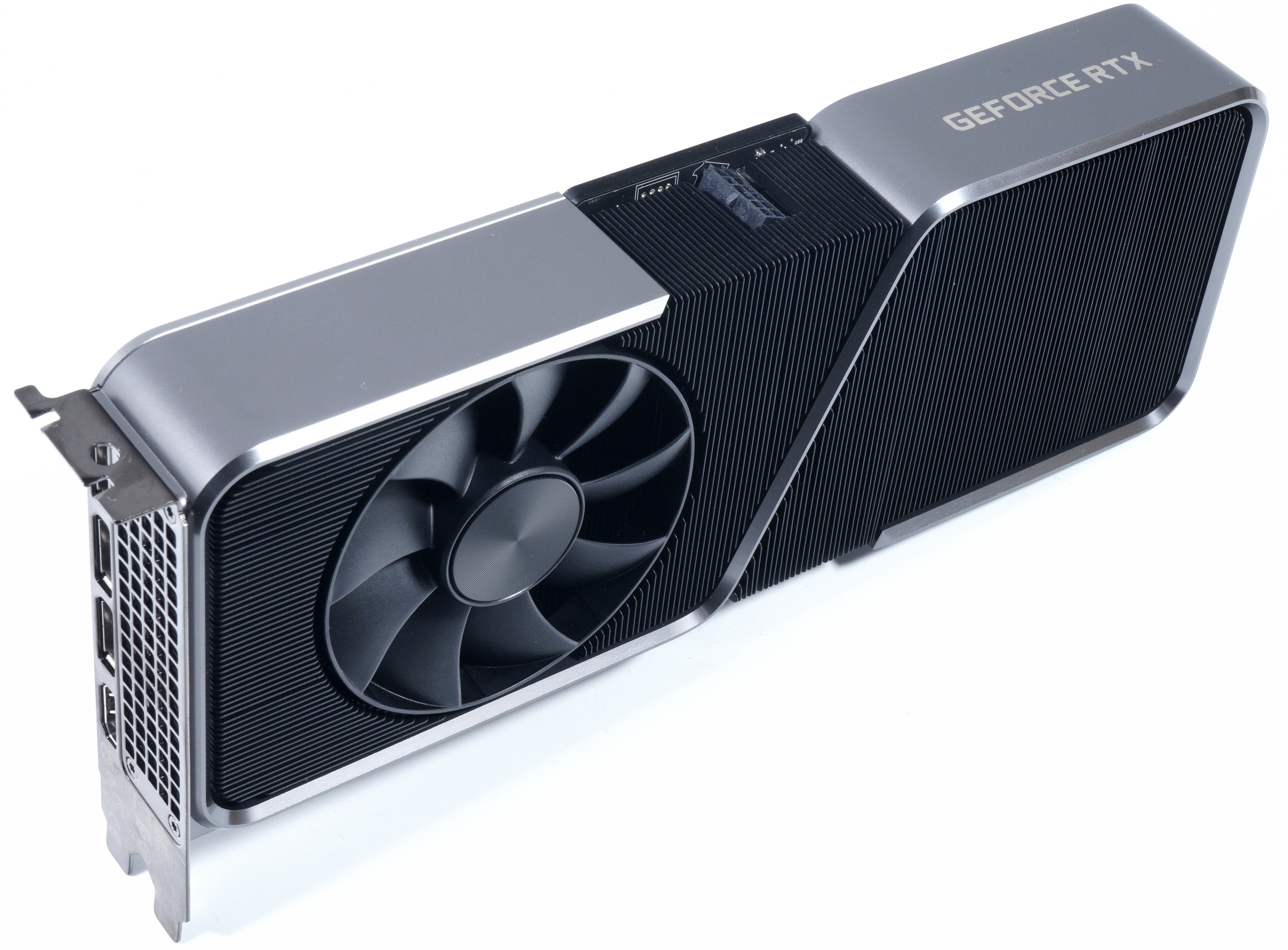
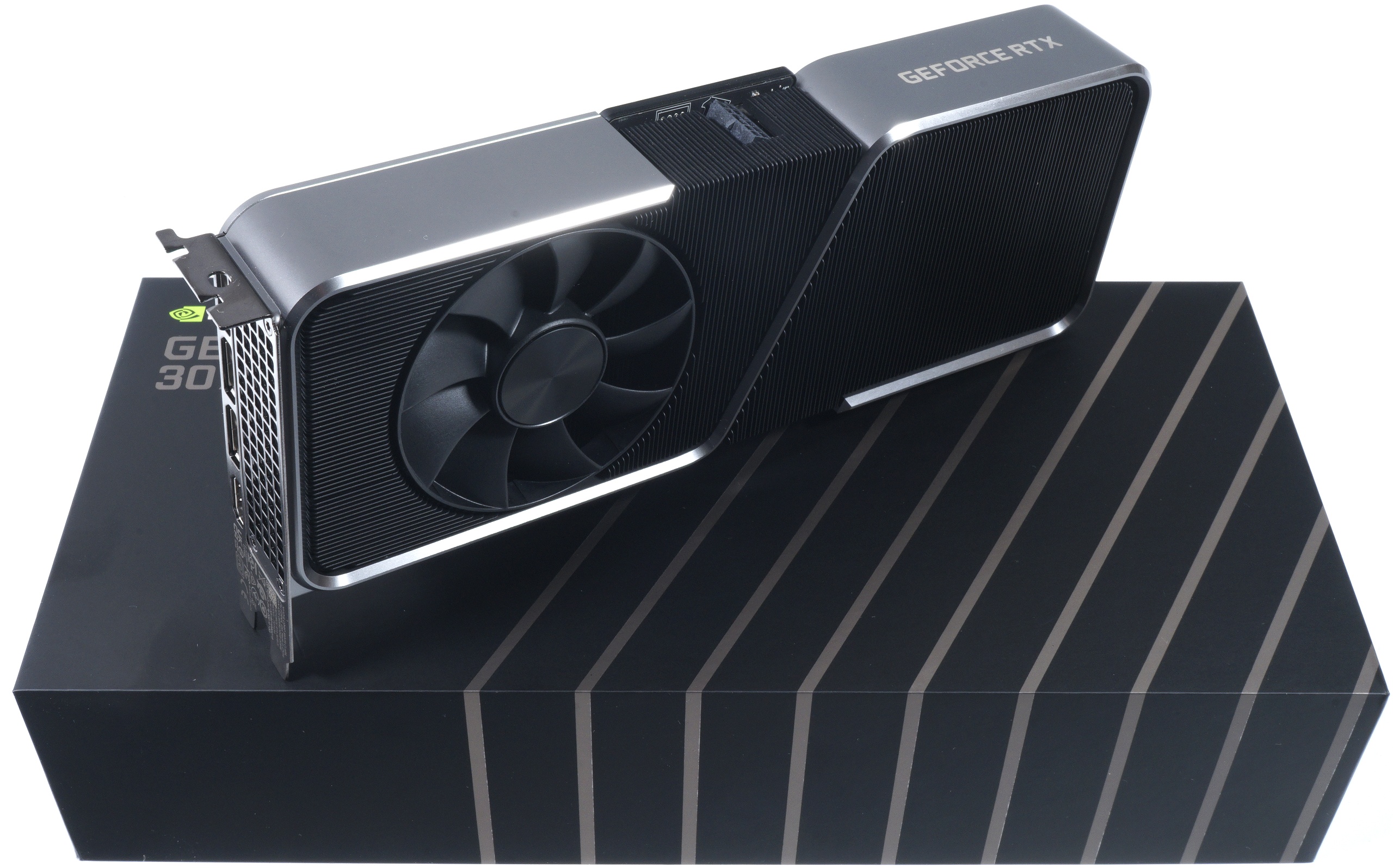

The fact that the review mainly refers to the background and details is actually only logical due to the introduction. Because I must, I can already spoil once, possible criticism also well to be able to prove. This also concerns the electrical conversion, the circuit board, the power consumption and of course the cooling. So reading material is already provided. Also, all cards were re-charged last week after the older models were also re-flashed with the latest rBAR BIOS.
The GeForce RTX 3070 Ti Founders Edition
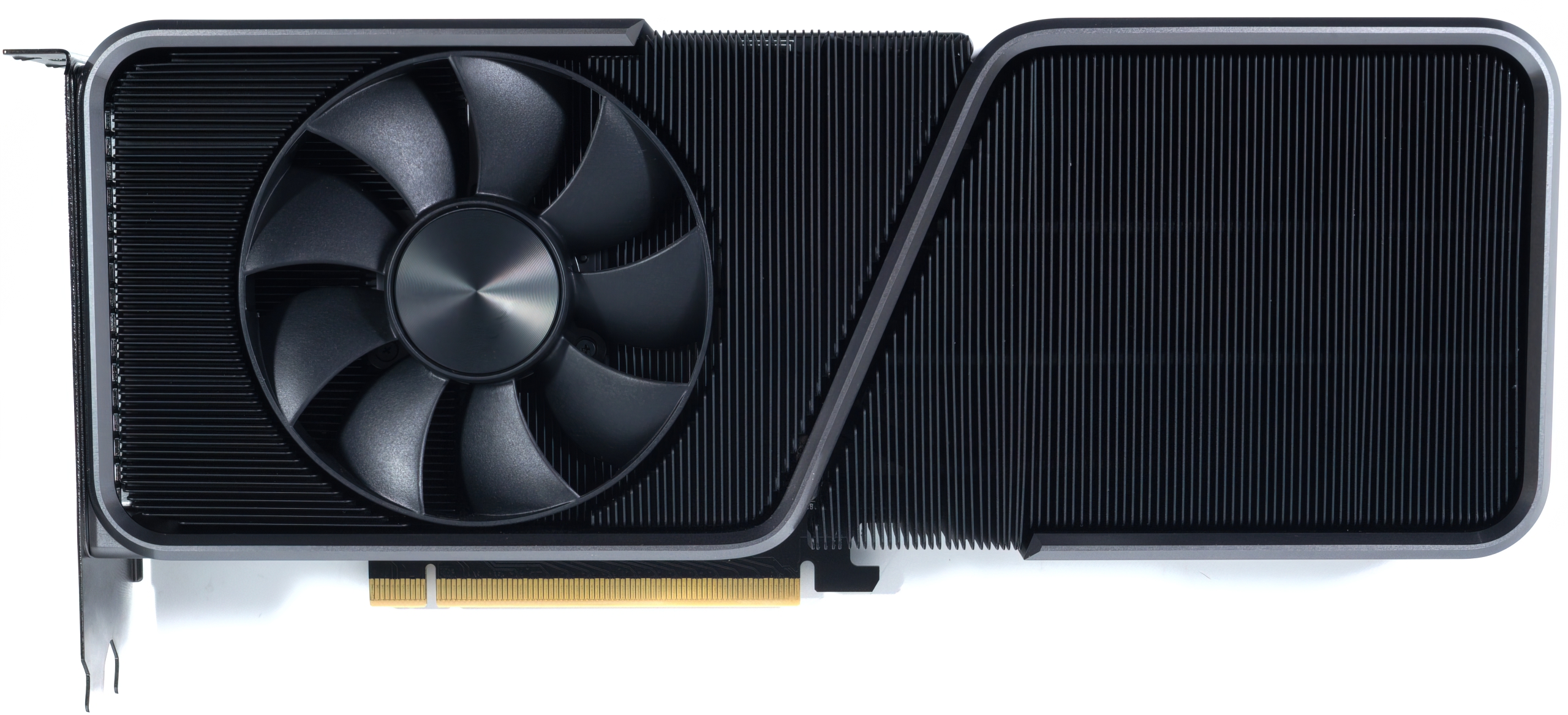
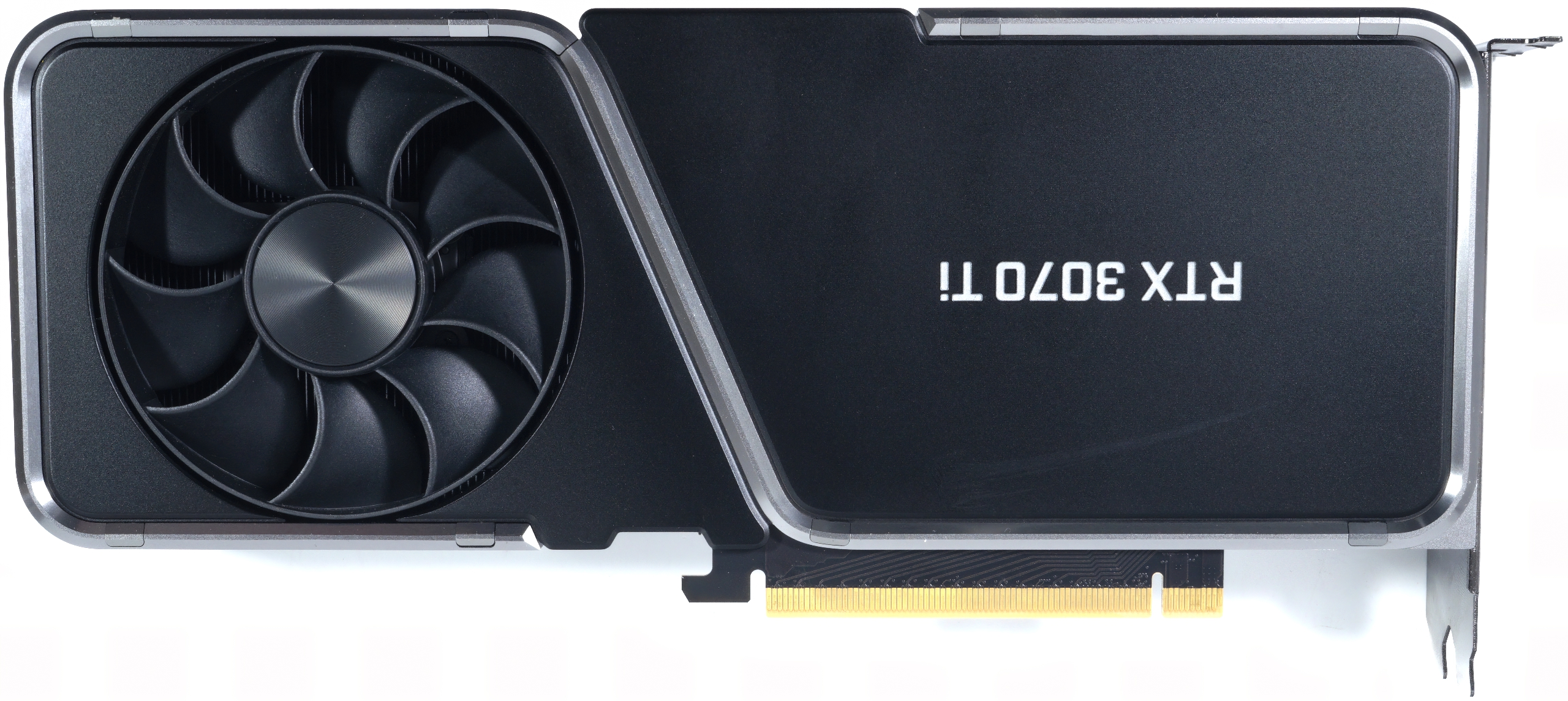
NVIDIA has once again come up with a new case for the GeForce RTX 3070 Ti. It lies between the GeForce RTX 3080 and the RTX 3070 in terms of effort, but as usual it’s also a pretty clever mix of light metal, plastic and hardware, which feels great and valuable and also looks good, but is still a bit simpler than its bigger sisters. The design with the 3.5 cm installation depth plus the 4 mm backplate makes this card a pleasing dual-slot design with all known advantages and disadvantages. It looks really good, has a quality feel to it, and there’s definitely something to like about the visual realization.

With just under 1200 grams, the card is of average weight. The length of about 27 cm is also rather average and the installation height of 10.5 cm from the upper edge of the PCIe slot with the card installed to the top of the cover is as low as usual. The funny 12-pin Micro-Fit 3.0 can’t be missing and sits again diagonally on the board like on the GeForce RTX 3080. Here you have to connect the included 12-pin adapter, to which the two conventional 6+2-pin plugs fit, which have been known for years. On the next page you will see the completely redesigned circuit board (PG143A). There are also further details about the slightly modified cooler design. Nvidia has omitted the NVLINK port.

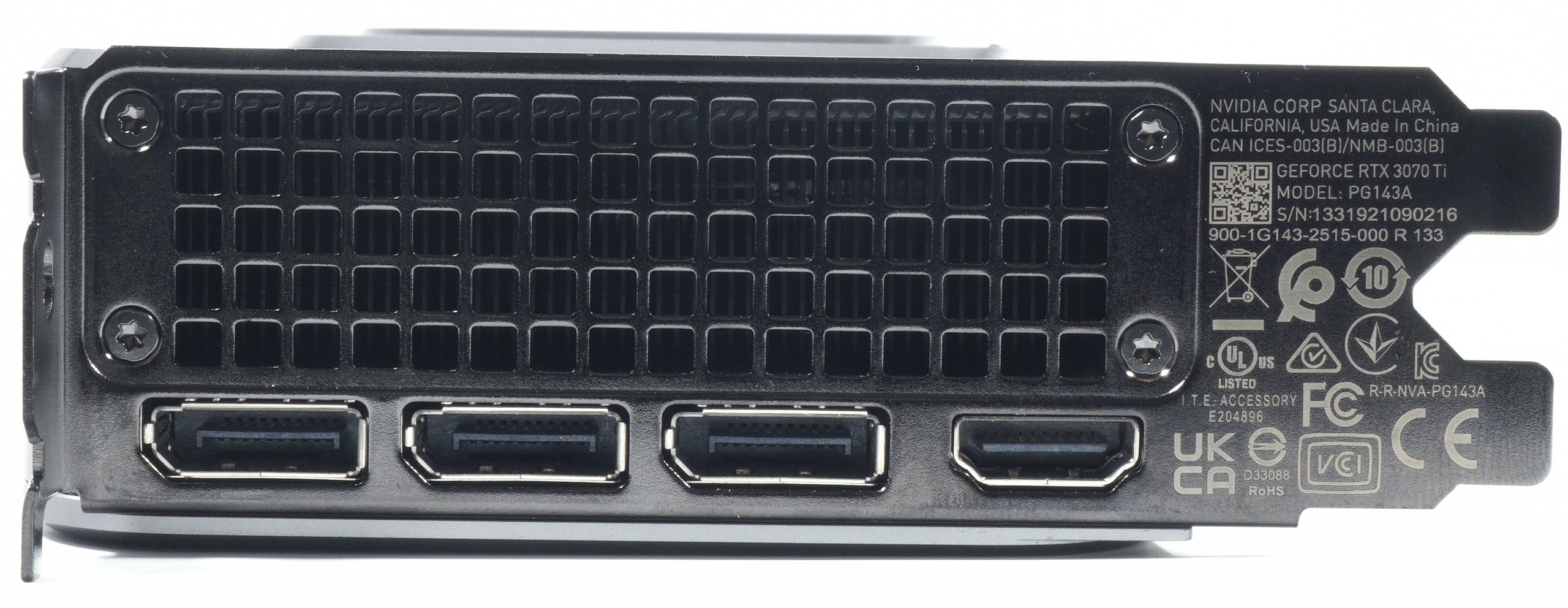
NVIDIA is once again abandoning USB Type C on the slot panel, probably because the VR hype has cooled down considerably in the meantime. Interestingly, AMD will re-record this feature on Big-Navi, while they seem to have already finished with it here. The new HDMI 2.1 port shouldn’t be missing, nor the three current DisplayPorts 1.4, of course. The very large cooling vents show which way the wind is blowing, and that’s about it for the exterior.
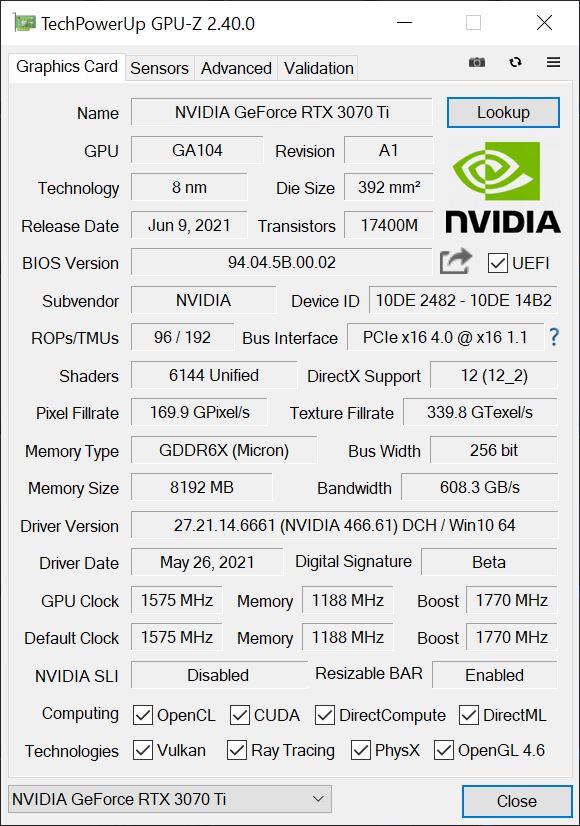
The data of the Founders Edition can be seen in the current GPU-Z screenshot, the rest I already mentioned above. The 1575 MHz base and the 1770 MHz boost clock are already known as well as the 1188 MHz memory clock and the memory expansion with 8 GB GDDR6X on the 256-bit interface with a cumulative bandwidth of 608.3 GB/s.
Again, I have a table for all statisticians among you, before it really gets going from the next page on.
| GeForce RTX 3070 |
GeForce RTX 3070 Ti |
GeForce RTX 3080 | GeForce RTX 3080 Ti |
|
|---|---|---|---|---|
| GPU | GA104-300 | GA104-400 | GA102-200 | GA102-225 |
| Process node | Samsung 8 nm | |||
| The Size | 395.2 mm2 | 628.4 mm2 | ||
| Transistors | 17.4 billion | 28 billion | ||
| CUDA Cores | 5888 | 6144 | 8704 | |
| TMUs/ROPs | 184/92 | 192/96 | 272 / 96 | 320/112 |
| Tensor/RT | 184 / 46 | 192/48 | 272 / 68 | 320 / 80 |
| Base clock |
1545 MHz | 1575 | 1440 MHz | 1365 MHz |
| Boost clock |
1740 MHz | 1770 | 1710 MHz | 1665 MHz |
| Memory | 8 GDDR6 | 8 GDDR6X | 10 GB GDDR6X | 12 GB GDDR6X |
| Interface | 256-bit | 320-bit | 384-bit | |
| Throughput | 16 Gbps | 19 Gbps | 19 Gbps | 19 Gbps |
| Bandwidth | 448 Gbps | 608.4 | 760 Gbps | 912.4 Gbps |
| TGP | 220 W | 290 W | 320 W | 350 W |
| Launch | 15.10.2020 | 09.06.2021 | 17.09.2020 | 02.06.2021 |

- 1 - Introduction, Unboxing and Technical Data
- 2 - Test System and Methods
- 3 - Teardown, PCB Analysis and Cooler
- 4 - Gaming Performance WQHD + FHD/RTX
- 5 - Gaming Performance Ultra-HD/DLSS
- 6 - Detailled Metrics and Graphics for all Games
- 7 - Frame Times vs. Power Draw
- 8 - Power Draw and Efficiency for all single Games
- 9 - Power Consumption Summary and Hi-Res Measuring
- 10 - PEG, Transients and PSU Recommendation
- 11 - Temperatures and Thermal Imaging
- 12 - Noise, Frequency Analysis and Audio-Sample
- 13 - Summary and Conclusion













15 Antworten
Kommentar
Lade neue Kommentare
Veteran
Veteran
Veteran
Mitglied
Urgestein
Mitglied
Veteran
Veteran
Veteran
Mitglied
Urgestein
Urgestein
Urgestein
Urgestein
Alle Kommentare lesen unter igor´sLAB Community →